


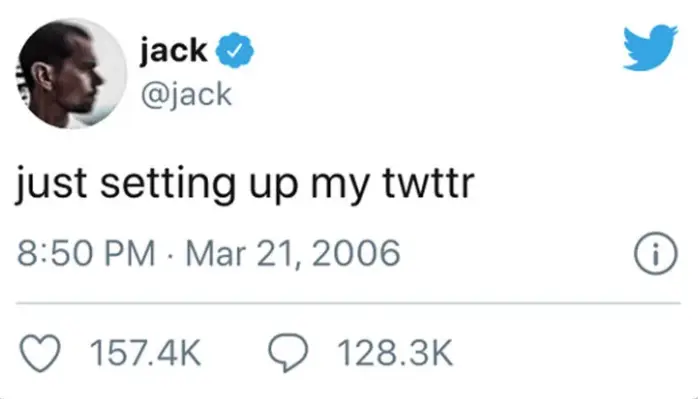
If you think you’re having a bad day, spare a thought for Sina Estavi. In March 2021, this Iranian-born crypto entrepreneur dropped $2.9 million USD on an NFT of Jack Dorsey’s first-ever tweet. You know the one: “just setting up my twttr.” Five words. No punctuation. The digital equivalent of a Post-it note that says “gone fishing.”
Estavi called it the “Mona Lisa” of tweets. He genuinely believed he’d purchased a piece of internet history that would appreciate like fine art. And look, we’ve all made questionable purchases after a few drinks, but most of us have the good sense to cap our regrets at a kebab and an ill-advised text to an ex. Not nearly three million dollars on a screenshot with a receipt.
To understand the sheer audacity of what happened next, you need to appreciate that Estavi didn’t just buy this thing to hold onto it. Oh no. In April 2022, barely a year after his purchase, he listed the NFT for sale at $48 million. Forty-eight million dollars. For a tweet. He genuinely expected someone to pay sixteen times what he’d shelled out, presumably because the crypto market was still high on its own supply of delusion.
The auction ran for a week. Seven people bothered to make offers. The highest bid? $280. Not $280 million. Not $280 thousand. Two hundred and eighty actual dollars. That’s less than a decent pair of runners. That’s a night out in Sydney if you’re being careful. That’s a 99.99% loss on what was supposedly digital fine art.
But wait, it gets worse. Because the NFT market didn’t just correct itself—it absolutely face-planted into the pavement. By 2023, the “Mona Lisa” of tweets was sitting on OpenSea with a best offer of $3.77. Less than four dollars. You could buy this historic piece of internet culture for less than a flat white. You could own what a tech millionaire once valued at nearly three million dollars for the price of a sad meal deal.
The thing is, Estavi wasn’t some random punter who got lucky on Bitcoin and decided to splash out. He was supposedly a sophisticated crypto investor. He ran a blockchain company. He looked at a five-word tweet with zero likes (at the time of minting) and thought, “Yes, this is where I park my retirement fund.” The confidence is almost admirable if you squint hard enough and ignore everything about basic financial literacy.
Jack Dorsey, to his credit, donated the $2.9 million to charity. So at least someone got something useful out of this whole debacle. The GiveDirectly Africa Response fund received the cash, which presumably helped actual human beings rather than sitting in a digital wallet as a monument to hubris.
The broader NFT market, of course, has since collapsed like a soufflé in an earthquake. All those bored apes and pixelated punks that people mortgaged their futures for? Most of them are worth about as much as the JPEG you could’ve right-clicked and saved for free. The whole thing turned out to be the tulip mania of our generation, except at least tulips were pretty to look at.
Estavi has remained relatively quiet about his investment since the auction flopped. Which is probably wise. When you’ve publicly demonstrated that you’d pay the price of a house for five words that anyone can read for free on the internet, there’s not much you can say that doesn’t make it worse.
So next time you’re beating yourself up about that gym membership you never use, or that subscription service you forgot to cancel, or that time you bought crypto at the top—just remember Sina Estavi. Somewhere out there, a man is sitting on a digital receipt for a tweet that cost him $2.9 million and is now worth less than your lunch.
Sleep well, legend.
Source: BBC News




Leave a comment